In my country this type of building came about in a society where many still lived in wood sheds without electricity or running water. Where people shared outhouses with their neighbors in the yard of actual residential buildings. Where every residence on average was overpopulated.
The architecture of the time homed huge amounts of people with running water, indoor toilets and electricity. Indoor heat without needing a fire.
The areas where they were erected weren’t much to look at before. The buildings today may be unappreciated but I find them lovely in a way. They’re a shadow of a society that cared for it’s citizens.
You’re forgetting the public transport availability, walkability, and facilities being part of the planning, i.e. the design was to include kindergartens, schools, hospitals, shops, etc., all not too far away to access on foot or a short commute that is regular and predictable and also easy to get to. Admittedly, it didn’t always happen, but still resulted in more liveable cities and areas than many of the new neighborhoods being built today in the same cities.


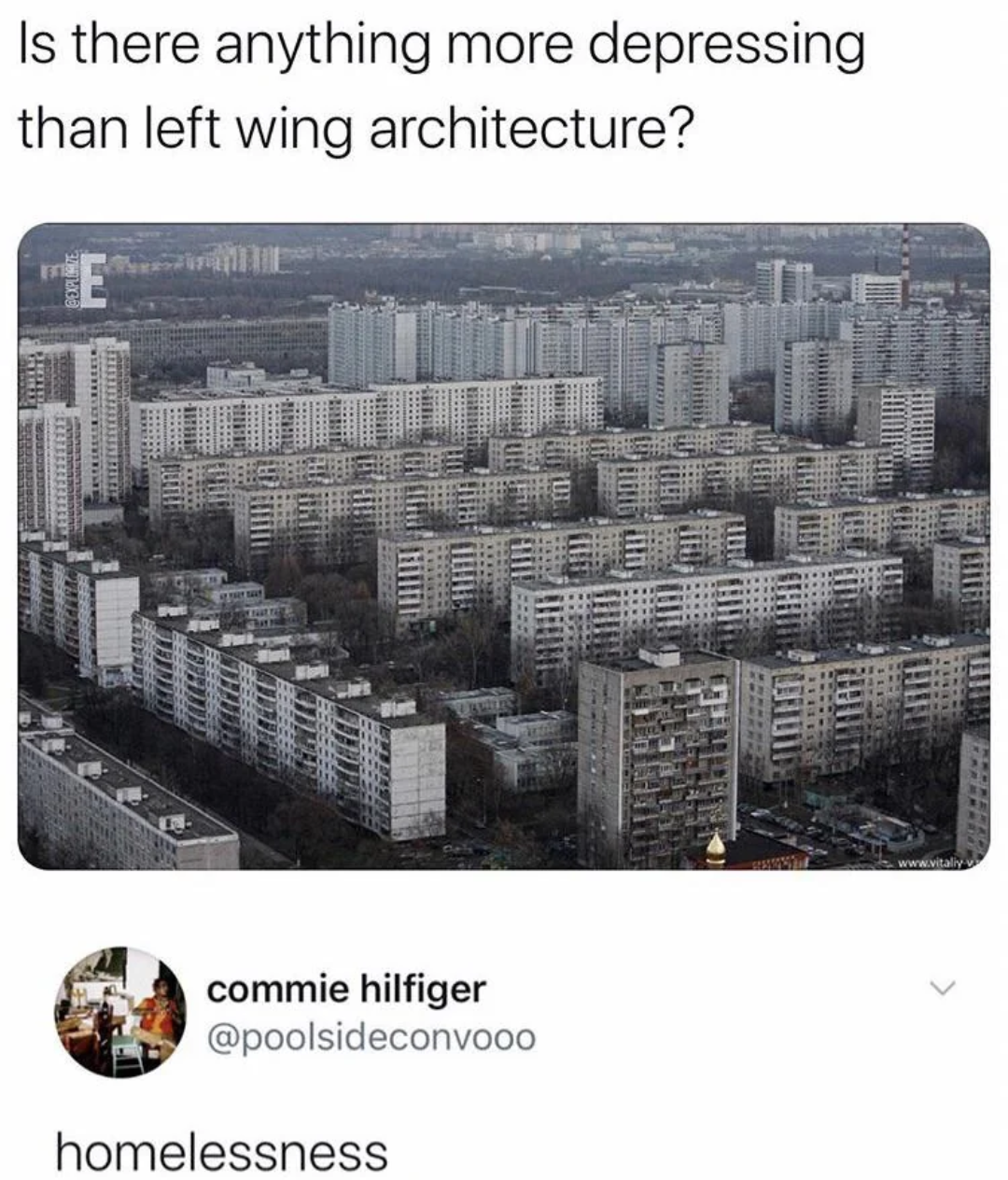
In my country this type of building came about in a society where many still lived in wood sheds without electricity or running water. Where people shared outhouses with their neighbors in the yard of actual residential buildings. Where every residence on average was overpopulated.
The architecture of the time homed huge amounts of people with running water, indoor toilets and electricity. Indoor heat without needing a fire.
The areas where they were erected weren’t much to look at before. The buildings today may be unappreciated but I find them lovely in a way. They’re a shadow of a society that cared for it’s citizens.
You’re forgetting the public transport availability, walkability, and facilities being part of the planning, i.e. the design was to include kindergartens, schools, hospitals, shops, etc., all not too far away to access on foot or a short commute that is regular and predictable and also easy to get to. Admittedly, it didn’t always happen, but still resulted in more liveable cities and areas than many of the new neighborhoods being built today in the same cities.