

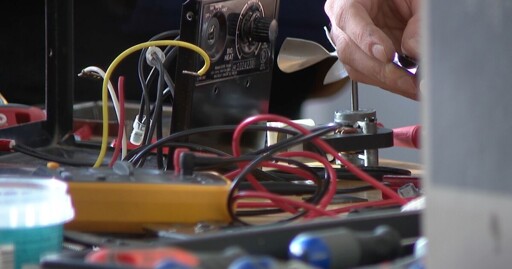
The new law will save the average household around $382 in repairs each year, according to the Colorado Public Interest Research Group.
The new law will save the average household around $382 in repairs each year, according to the Colorado Public Interest Research Group.
The right-to-repair does no good if the device is not designed to BE repaired.
But then those devices would be harder to manufacture and QA, and probably be more obvious to tge consumer they’re less repairable
I have been in the appliance repair business for 50 years (half a century)
Motors used to be BOLTED together, now they are GLUED together. I can’t re-build motors anymore.
It used to take me a half hour to change the clutch slave cylinder on my truck. Now (newer truck) I have to PULL the transmission to do that. TWO DAYS!
Think of the shareholders.
50 years ago you were working on brushed motors with relatively sloppy tolerances, less torque, and more electrical consumption. Today’s brushless motors are faster, stronger, lighter, more efficient, and designed to higher tolerances.
Very few vehicles in the U.S. have a manual transmission and the prevalence of them is decreasing quickly in all western countries. No matter how much we may prefer manuals it’s inarguable that modern automatics get better fuel economy, are easier to operate and are often stronger than their manual equivalent.
My point here is that often the same advances that make things better make them more difficult to service.
But they’re already manufactured like that.