The whole initial pitch from Tesla, that basicslly got EVs conceptually over the hump into being potentially practical… at a paradigmatic level…
… was Elon saying he was gonna build a whole network of infrastructure for that, charging networks.
… and then 90% of that never happened.
Remember when we were gonna have basically a carwash type thing but it would just do a battery swap on your car?
Remember when he was all giddy about the SOLID METAL SNAKE that was gonna basicslly just be a robot tentacle that would automagically plug in to your charging port?
Yeah, basically none of that shit happened, similar to all that money we gave to the ISPs and such to build out fiber networks, most of which just went into stock buybacks, not infrastructure.
So my point is, you run into the same fundamental problem with hydrogen, now you need to build a whole new set of infrastructure.
… Who is going to pay for that?
Oh and also power would not be free.
Not for a long long time, not untill you solve capitalism.
Even with the magical thinking of an over unity power generator, you have do another order of magnitude of magical thinking to think that that somehow just makes power, in general, free, in a capitalist system.
They’ll find a way, many ways, to make it cost money.
… so you’re saying to use i guess infinite amounts of energy to … do abiotic synthesis and just literally produce hydrocarbons?
… Like, just Fischer-Troph everything?
I suspect you are wildly oversimplifying the complexity of the chemical processes involved…
…for the general concept of what you are saying, to make actual sense…
Your abiotic hydrocarbon synthesis process would have to be less energy demanding than the constant surplus energy production rate of a theoretical over unity fusion generator.
Just getting any fusion generator than is any miniscule amount of truly over unity, thats not enough.
Thats infinite energy… if you have an infinite amount of time to wait, and an infinite amount of some kind of battery system to contain that energy in.
Synthetic fuel production is kind of notorious for being immensely energy intensive.
And for FT at least, you need a feedstock of either biomass, coal or natural gas.
If you want to just do some kind of variant of an FT like process, where your feedstock is ultimately ‘refined air’… you’re going to need even more energy, a fusion generator than is over unity by an even larger margin.
It is a little more complicated than just ‘heat up CO2’.
Unless you can point me to … somebody who has actually worked out the chemistry of how you can just synthesize hydrocarbons from… ambient CO2… that you’re scrubbing from the air… demonstrated this entire process at a tiny scale as proof of concept… and described the total amount of energy required to power this process…
Yes, it requires significantly more energy than you get from burning the hydrocarbons, but the whole promise of fusion is virtually limitless clean energy with minimal nuclear waste.
Well hey, ok, that’s what I asked for, its a detailed outline of the process!
What that whole process ultimately is, is pumping a bunch or energy into a machine, a process, that outputs hydrocarbons, which are basically energy in another form.
(Or maybe more accurately, precursors to being able to form more typical HC energy, or useful inputs to some other chemical sysnthesis process)
So, for this to even conceptually make sense, overall, you’d need to have your … fusion reactor be able produce an over unity surplus of energy, at a constant rate, that is equal in $$$ value to… basically, the sellable price of the hydrocarbon fuel you are producing, at that same rate.
And that’s simplifying out, assuming that you don’t need to further refine or otherwise transform the hydrocarbons produced by this process, which you probably would.
They do outline output volumes and concentrations, as well as… enough info that you could work backward and figure out how much energy they’re actually pumping in to this process, to achieve said yields.
So, from that, you could figure out what the required… ratio of over unity-ness of the fusion generator would have to be.
But, also, note that prices of various forms of energy, input energy, output hydrocarbon, they’re a major factor in whether or not this whole idea is viable or not, and prices can and will fluctuate.
It seems to me that this particular process … the authors seem to be describing it as not producing very high amounts of the most useful kinds of precursors for general fuel production, but is producing potentially useful amounts of precursors for other kinds of processes:
The low DME concentration and high H2: DME molar ratio in the CO2-to-HC reactions in this study may facilitate hydrogen transfer for the chain growth termination step and therefore limit the C chain length of the products, leading to formation of isobutane and isopentane as dominant products instead of isobutane and triptane, as observed at greater DME concentration. These light branched paraffins (isobutane and isopentane), which are not ideal blendstocks for high-octane gasoline, are in fact versatile precursors for SAF synthesis via commercially available alkane dehydrogenation and alkene oligomerization processes.[29], [34], [35].
They also seem to reference other attempts at modifying something like an FT process, that are more productive at producing precurors for, general fuel:
Other research groups have investigated CO2 hydrogenation over similar composite catalyst systems…
Hydrophobic modification of HBEA to improve water tolerance substantially increased C4+ HC yield and selectivity to 6.1% and 22.3%, respectively. [19] Using a 2-stage reactor system provided flexibility to control temperature of the reactors independently to achieve high CO yield in the first reactor which facilitated MeOH and MTH synthesis at the second reactor at 300 °C. The inter-stage water removal improved the activity of HBEA for MTH, resulting in C4+ HC yield and selectivity of 6.8% and 14.9%, respectively. [16]
This is genuinely novel and interesting, so I do thank you for actually informing me of this, and rescind my earlier claim of ‘bullshit’, modifying it to ‘needs further research’, specifically in the realms of how you’d scale this up, and what surrounding infrastrucure and economic parameters you’d need for this to be economically viable.
It is neat to learn that this is a thing that we can actually do… but you’d still have to work out the math of the conditions under which it would make sense to do, and be overall productive and useful… figure out how much over-unity-ness you’d need from a theoretical fusion generator for doing this to make sense.
Also:
We have termed this approach the high-octane-gasoline (HOG) pathway.
I just want to take a moment and laugh at that, lol.


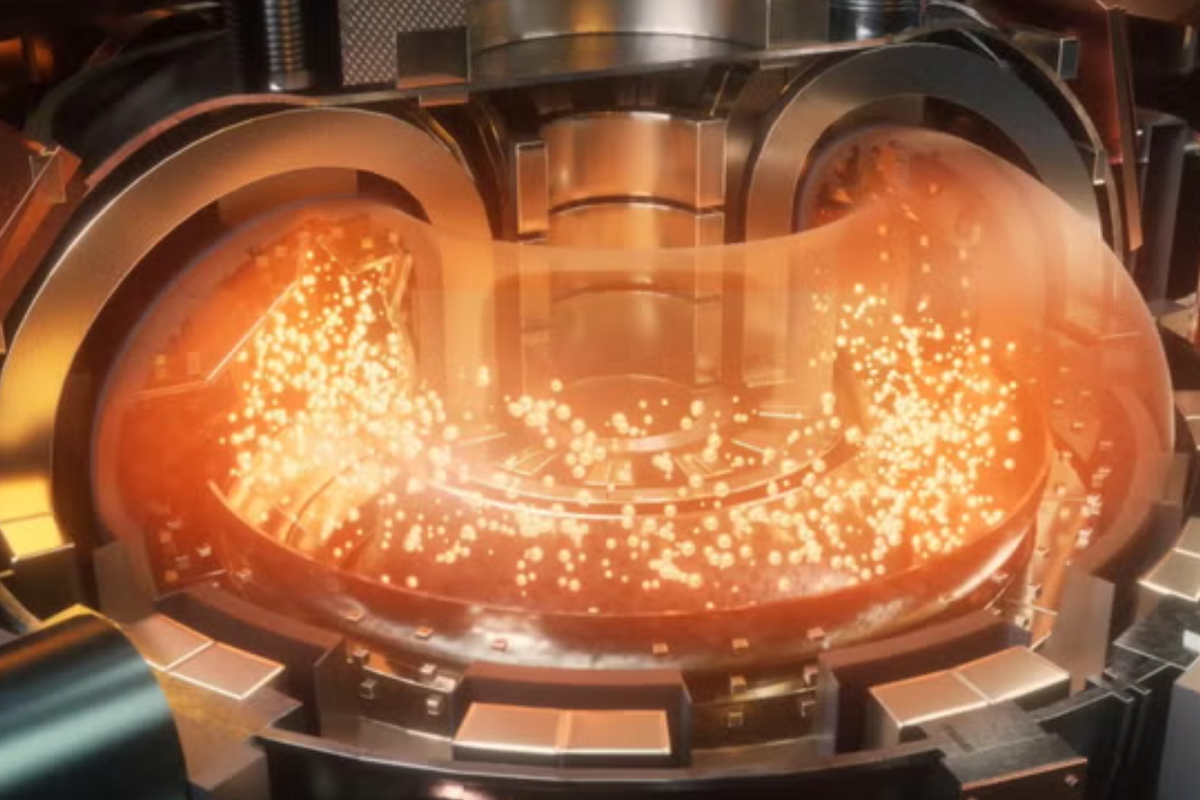
If the power is free, you can synthesize hydrogen or even hydrocarbons from captured CO2.
Cool and hows all that coming along?
Hydrogen vehicles?
The whole initial pitch from Tesla, that basicslly got EVs conceptually over the hump into being potentially practical… at a paradigmatic level…
… was Elon saying he was gonna build a whole network of infrastructure for that, charging networks.
… and then 90% of that never happened.
Remember when we were gonna have basically a carwash type thing but it would just do a battery swap on your car?
Remember when he was all giddy about the SOLID METAL SNAKE that was gonna basicslly just be a robot tentacle that would automagically plug in to your charging port?
Yeah, basically none of that shit happened, similar to all that money we gave to the ISPs and such to build out fiber networks, most of which just went into stock buybacks, not infrastructure.
So my point is, you run into the same fundamental problem with hydrogen, now you need to build a whole new set of infrastructure.
… Who is going to pay for that?
Oh and also power would not be free.
Not for a long long time, not untill you solve capitalism.
Even with the magical thinking of an over unity power generator, you have do another order of magnitude of magical thinking to think that that somehow just makes power, in general, free, in a capitalist system.
They’ll find a way, many ways, to make it cost money.
Ok, so use the hydrogen to make heavier fuels, you just need heat and CO2.
America might not do anything, but China would be happy to sell USA’s emissions back to them for profit.
… so you’re saying to use i guess infinite amounts of energy to … do abiotic synthesis and just literally produce hydrocarbons?
… Like, just Fischer-Troph everything?
I suspect you are wildly oversimplifying the complexity of the chemical processes involved…
…for the general concept of what you are saying, to make actual sense…
Your abiotic hydrocarbon synthesis process would have to be less energy demanding than the constant surplus energy production rate of a theoretical over unity fusion generator.
Just getting any fusion generator than is any miniscule amount of truly over unity, thats not enough.
Thats infinite energy… if you have an infinite amount of time to wait, and an infinite amount of some kind of battery system to contain that energy in.
Synthetic fuel production is kind of notorious for being immensely energy intensive.
And for FT at least, you need a feedstock of either biomass, coal or natural gas.
If you want to just do some kind of variant of an FT like process, where your feedstock is ultimately ‘refined air’… you’re going to need even more energy, a fusion generator than is over unity by an even larger margin.
It is a little more complicated than just ‘heat up CO2’.
Unless you can point me to … somebody who has actually worked out the chemistry of how you can just synthesize hydrocarbons from… ambient CO2… that you’re scrubbing from the air… demonstrated this entire process at a tiny scale as proof of concept… and described the total amount of energy required to power this process…
Yeah I’m calling bullshit.
https://www.sciencedirect.com/science/article/pii/S2212982022003808
Yes, it requires significantly more energy than you get from burning the hydrocarbons, but the whole promise of fusion is virtually limitless clean energy with minimal nuclear waste.
Well hey, ok, that’s what I asked for, its a detailed outline of the process!
What that whole process ultimately is, is pumping a bunch or energy into a machine, a process, that outputs hydrocarbons, which are basically energy in another form.
(Or maybe more accurately, precursors to being able to form more typical HC energy, or useful inputs to some other chemical sysnthesis process)
So, for this to even conceptually make sense, overall, you’d need to have your … fusion reactor be able produce an over unity surplus of energy, at a constant rate, that is equal in $$$ value to… basically, the sellable price of the hydrocarbon fuel you are producing, at that same rate.
And that’s simplifying out, assuming that you don’t need to further refine or otherwise transform the hydrocarbons produced by this process, which you probably would.
They do outline output volumes and concentrations, as well as… enough info that you could work backward and figure out how much energy they’re actually pumping in to this process, to achieve said yields.
So, from that, you could figure out what the required… ratio of over unity-ness of the fusion generator would have to be.
But, also, note that prices of various forms of energy, input energy, output hydrocarbon, they’re a major factor in whether or not this whole idea is viable or not, and prices can and will fluctuate.
It seems to me that this particular process … the authors seem to be describing it as not producing very high amounts of the most useful kinds of precursors for general fuel production, but is producing potentially useful amounts of precursors for other kinds of processes:
They also seem to reference other attempts at modifying something like an FT process, that are more productive at producing precurors for, general fuel:
This is genuinely novel and interesting, so I do thank you for actually informing me of this, and rescind my earlier claim of ‘bullshit’, modifying it to ‘needs further research’, specifically in the realms of how you’d scale this up, and what surrounding infrastrucure and economic parameters you’d need for this to be economically viable.
It is neat to learn that this is a thing that we can actually do… but you’d still have to work out the math of the conditions under which it would make sense to do, and be overall productive and useful… figure out how much over-unity-ness you’d need from a theoretical fusion generator for doing this to make sense.
Also:
I just want to take a moment and laugh at that, lol.
what if we abolish capitalism?