
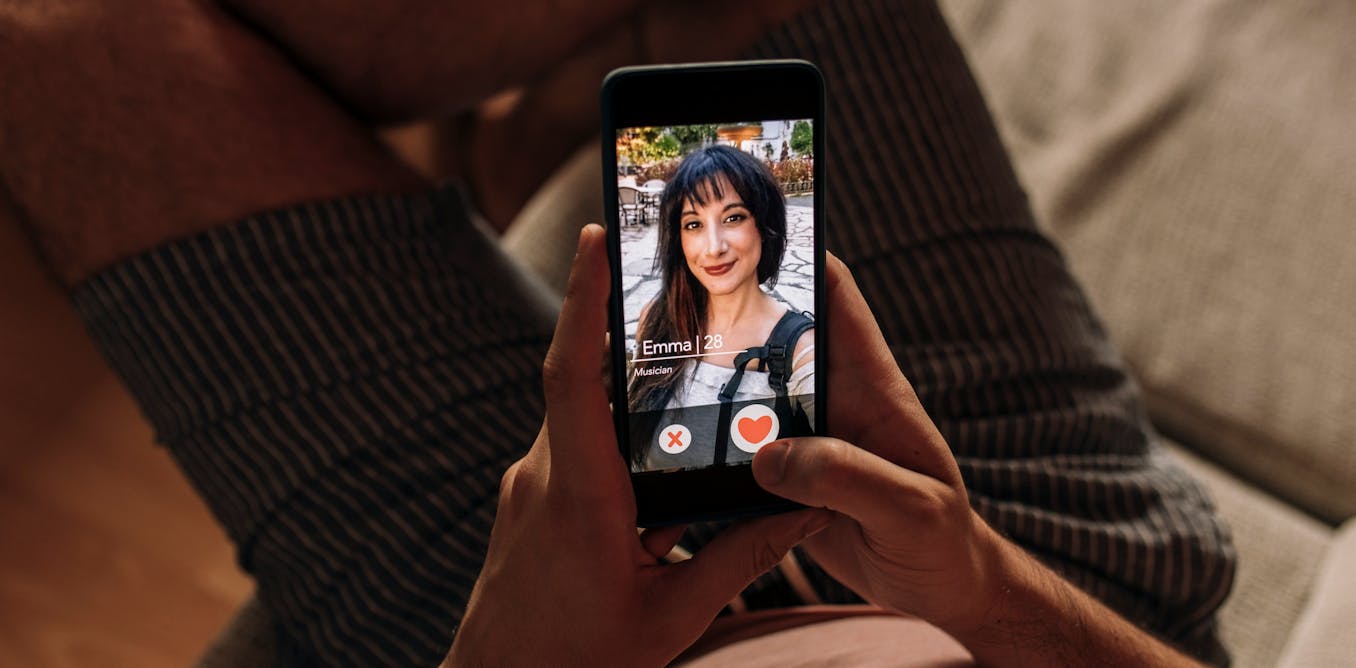
In the weeks leading up to Valentine’s Day, dating apps typically see a spike in new users and activity. More profiles are created, more messages sent, more swipes logged.
Dating platforms market themselves as modern technological solutions to loneliness, right at your fingertips. And yet, for many people, the day meant to celebrate romantic connection feels lonelier than ever.
This, rather than a personal failure or the reality of modern romance, is the outcome of how dating apps are designed and of the economic logic that governs them.
These digital tools aren’t simply interfaces that facilitate connection. The ease and expansiveness of online dating have commodified social bonds, eroded meaningful interactions and created a type of dating throw-away culture, encouraging a sense of disposability and distorting decision-making.
It doesn’t have to be. In the US, about 4 million people turn 18 every year. Let’s say you get all of them signed up and all of them optimally paired off. You still have another 4 million new signups next year. Until the world falls off a demographic cliff, you’ve got an evergreen customer population.
That being said, the well is VERY poisoned at this point. The match group is a cancer on our society.
But why limit yourself to the 4 million new customers when you could have 4 million news customers AND potentially 4 million retained customers from last year.
Because I’m not a sociopath. In this theoretical happily-ever-after dating app, I want to make people happy by connecting them with the right other people. Ongoing business comes from happy couples giving word of mouth recommendations to their friends and family, not from trying to lock in a misery subscription.
Maybe I’m old fashioned. I remember a time when capitalism meant “make money by doing something helpful for people” instead of rent-seeking bamboozle profits.
We are at the point where connected interests could manipulate things to get people they have a problem with get bad results, bad treatment on dating sites, it has to be said. There is one group in particular that ruthlessly pursues those that disagree with certain foreign policy aspects of the US, that has a lot of clout, and would totally do that, and worse. I wouldn’t assume they haven’t.
I do know some people suspect that they were put on internet ip blacklists for opposing those interests, there are a few dozen blacklists, supposedly of spammers and the like, people that aren’t that end up on there, can’t get off, companies want money and more personal information and to beg them and maybe they will take you off, many international.
The US does nothing for us when a foreign company does this? Why? I can think of one reason, their allies put those people on the list for making them look like assholes in other contexts.