
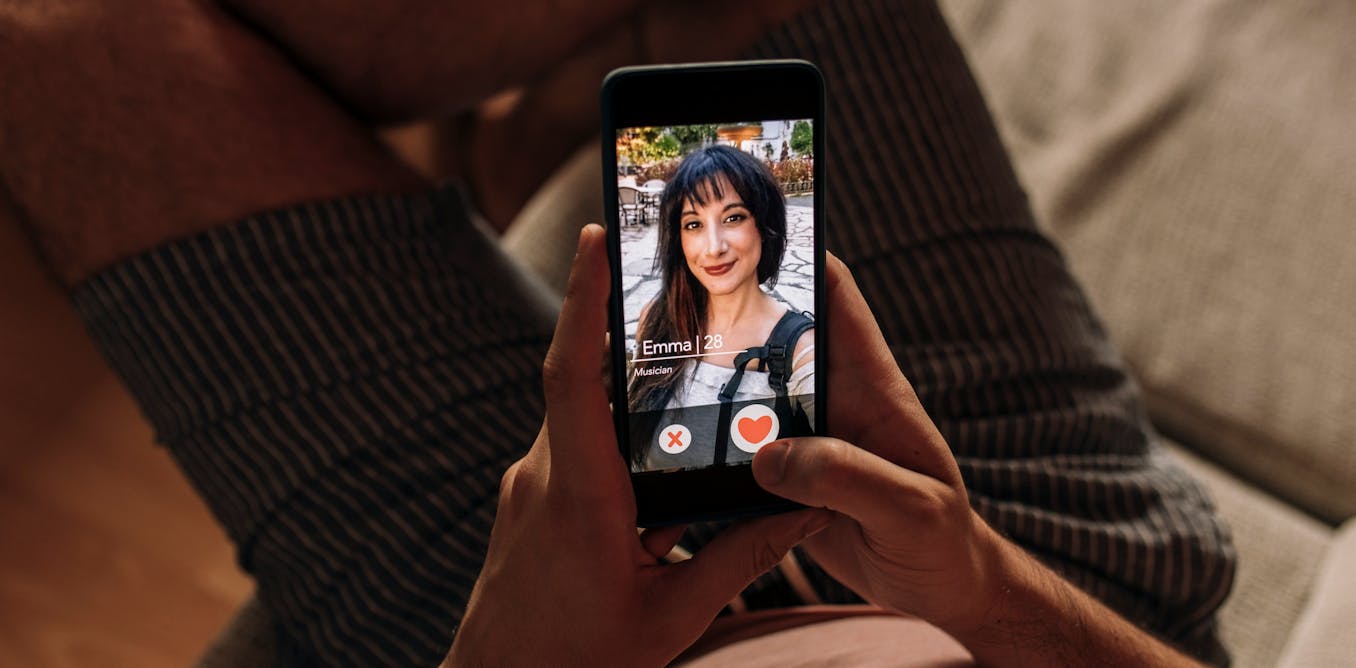
In the weeks leading up to Valentine’s Day, dating apps typically see a spike in new users and activity. More profiles are created, more messages sent, more swipes logged.
Dating platforms market themselves as modern technological solutions to loneliness, right at your fingertips. And yet, for many people, the day meant to celebrate romantic connection feels lonelier than ever.
This, rather than a personal failure or the reality of modern romance, is the outcome of how dating apps are designed and of the economic logic that governs them.
These digital tools aren’t simply interfaces that facilitate connection. The ease and expansiveness of online dating have commodified social bonds, eroded meaningful interactions and created a type of dating throw-away culture, encouraging a sense of disposability and distorting decision-making.
True for pretty much all social apps.
That’s because a social app that quickly solves the need of making a connection and then perpetually the need of maintaining it was called ICQ. Or AIM. Or other such. They were focused on the part after that hope.
The reason that’s no longer the normal model is simple - weak people are easier to exploit. The “after hope” model doesn’t keep people weak.
Even with XMPP - the classic instant messenger model of adding someone to friends, remember it? You send one invite message, and after it the other side won’t see anything you want to send until it accepts you into contacts. It might never do that. Or it might add you, see you’re sending unsolicited dick pics, remove you.
With dating apps all you need is a search by tags and tags corresponding with truth, and of course ability to choose who can contact you. The former is not hard. The latter is hard when people are interested in putting false tags, but not when the tag social metric, so to say, is commutative. The model where conversations are started by mutual “like” is good, I think. And the anonymized way (like with Pure, have tried using it when decided to become more social, got some insights but no dates, or more specifically one failed date) is good, when those who liked you are shown as anonymous invitations to accept or deny, but also when mutual “like” means accepting that invitation. I think one’s visibility and one’s point of view are something that should both be customizable with logical conditions. One should be able to set they want to only be seen by people without “no less than 20 inches” wish to not be frustrated when those people ghost them, or that they don’t want to see people without photos on their page, or that they only want to see people and be seen by people who like hiking or who like animals, but not both at the same time, or any other set of logical rules, everyone is different. Perhaps a limit on searches is good, though.
And then there is crime. Or mental illnesses. Or bad hygiene. Or conflict. That is, there are situations where outside observers should be able to evaluate who of the two sides is telling the truth about the other side being an abuser or whatever. I suppose some kind of escrow for contacts can be devised. This should be a social thing, a moderator can’t be trusted with correspondence and also with judgement. So - escrow by people trusted by both sides, something like that. To have a rating, it should be possible to tell who’s really spilling tea and who’s doing libel.
And if you were reading attentively, you might have noticed this doesn’t just apply to dating, this applies to everything about establishing contact over social media. Because that’s absolutely correct, dating doesn’t differ in anything from any other social connectivity. In other social events you too want to quickly find and communicate for long with someone. Romance being involved doesn’t change much or anything.
The reason these two purposes have been separated by businesses is pretty transparent - trying to apply general social media to dating shows that they don’t work, and trying to apply dating social media to normal long-term communication shows that they too don’t work. The issue is that what’s invisible still exists. That separation is just hiding what doesn’t work, but it still doesn’t work. A functional social media would function for both dating and daily buddy talk. Like ICQ did.