
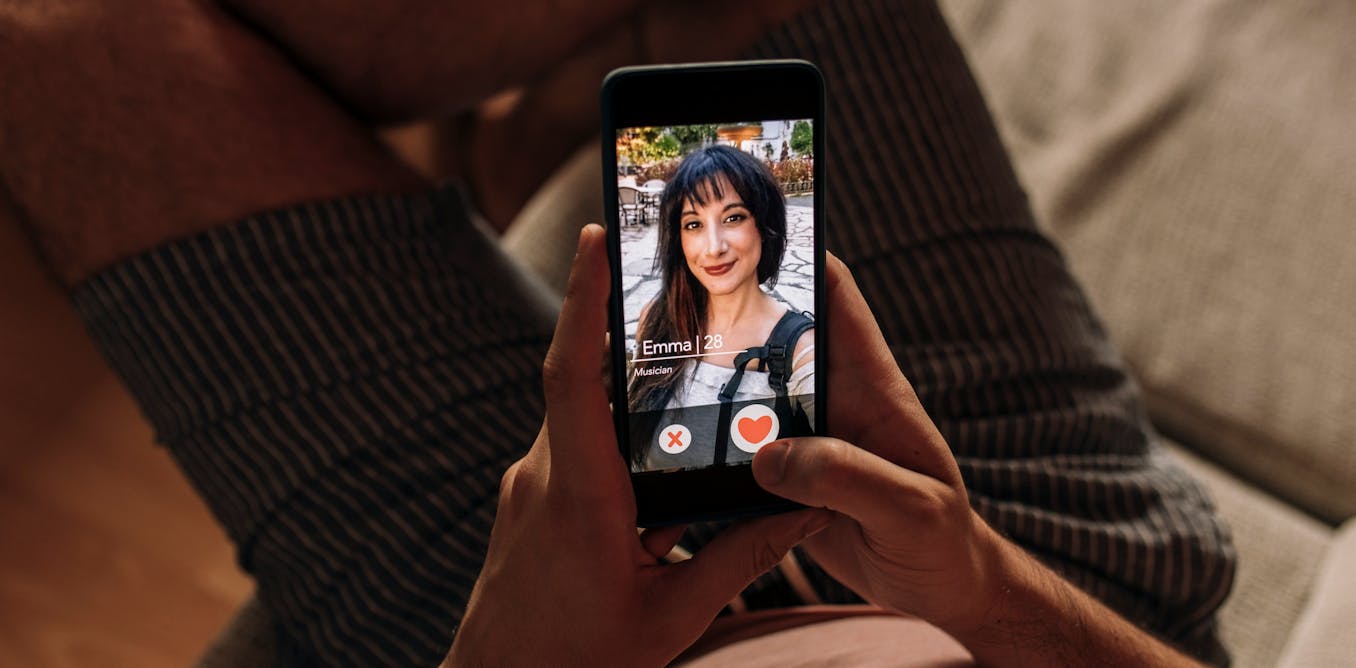
In the weeks leading up to Valentine’s Day, dating apps typically see a spike in new users and activity. More profiles are created, more messages sent, more swipes logged.
Dating platforms market themselves as modern technological solutions to loneliness, right at your fingertips. And yet, for many people, the day meant to celebrate romantic connection feels lonelier than ever.
This, rather than a personal failure or the reality of modern romance, is the outcome of how dating apps are designed and of the economic logic that governs them.
These digital tools aren’t simply interfaces that facilitate connection. The ease and expansiveness of online dating have commodified social bonds, eroded meaningful interactions and created a type of dating throw-away culture, encouraging a sense of disposability and distorting decision-making.
Most of the apps are trashy and don’t optimize for good matches.
At the same time, many users half-ass using them, or deploy a variety of self-sabotage. (No, it’s not that you’re not tall or hot or whatever. It’s more likely your impersonal message didn’t warrant a response)
These two facts together mean a lot of people have truly bad outcomes.
Honestly the way a lot of the Tinder-style ones (swiping) are designed it almost feels like they’re meant to be half-assed? You can’t filter by likes, just exclude by dislikes (ex. Don’t include people who don’t want kids, don’t include smokers, etc) because there’s no search anymore. They just show you a profile, and you swipe.
When I was using them I very quickly stopped reading bios before they matched back. I just swiped right on everyone, checked daily for new matches, read those profiles and blocked/messaged people based on what was in their profile.
Speaking on filters, though: They don’t even work. I had men filtered out, and I ended up getting about 25% of profiles being men. Like, the only gender tag they had was “Man,” which lead to a lot of the “Idk why they even showed me to you I have men filtered out” message being sent.
I had that happen to me, too, and I’m a straight man. Never really wanted to do gay stuff, and yet Tinder would constantly throw in gay matches as if to say “are you SURE you don’t wanna do a little experimenting while we watch?”
The top of the funnel I could see an argument for not putting a lot of thought in. You’re just trying to get a pool of potential matches. (The apps are cruel for making you pay for this and not just giving you the list up front)
But once you do have a match, you have to put in some effort to stand out. A lot of people get a match and all they write is “hey”, and then they go right into the trash. Why would I engage with someone who just wrote “hey” when I could instead talk to someone who read my profile and said something personalized?
Also swiping yes on everyone might do strange things to their recommendation algorithm. Unfortunately that’s a black box, but I wouldn’t be surprised if that puts you in some sort of chum bucket shadow ban situation.
And also, yeah, making you pay for basic filters is a trashy design. Match group should be broken up.
Maybe, but it did happen earlier on before I’d started, so I think the filters are just kinda not great to start
I feel like it’s hard to craft a bunch of personal responses only to receive no response or a short conversation that dries up quickly afterwards. Talk about exhausting! Might as well start with the bare minimum and engage more if there’s interest back. Otherwise I can’t maintain the energy to keep it up.
Yeah, it can be hard, but many things worth doing are hard. If you start with the bare minimum, the other person’s first impression of you is that you half-assed it. Would you be extra interested in someone who’s too half assed to even read your profile?
Put in the hard work. If you don’t have the energy, don’t use the apps. Half-assing it is just going to make you unhappy.
On essentially all of them, they went to a swipe right to like and a swipe left for no.
Except when actually trying to make a match, it’s more advantageous to literally swipe right on everyone to maximize matches and then unmatch if you match with someone you aren’t interested in.
But if you are swiping left, you will match with significantly fewer and potentially none. It becomes demoralizing. And it takes much longer to make a decision if you are looking at everyone including those that don’t match with you so you go through fewer people to potentially match with.
Wait until you match with someone to look at their pictures and their profile, and only then, decide whether to stay matched or unmatch.
I had quite a few short relationships from tinder and bumble. But some of those wouldn’t have happened if I were more picky at the swiping stage.
This isn’t true if their system punishes people for swiping “yes” on everyone. While I can’t be certain that’s the case, it seems very plausible it is. Swipe yes on everyone, your profile is down ranked, you don’t get as many good matches.
Additionally, tinder and hinge only allow you a limited number of yes swipes per day. If you blow them on the first ten profiles, you’re going to have worse results than if you spend a little longer looking at profiles.
Furthermore, on hinge, you can send a message with your like. Your chances of having a conversation and date go way down without a good message.
As a dude, I wasn’t matching while I was swiping often. I’d swipe in the morning and then see what came up through the day.
They may have changed their apps in the… 10 or so years since I used them. But the premise is the same, the more you swipe right on the better the odds of matching someone that swipes right on you. Even if you don’t swipe right on everyone, be extremely generous on your swipes.
This is wild advice, thier algorithm will say “this person is addicted to matches and will literally match with anyone, sell him the unlimited swipes package and downgrade his match chance exposure to keep him hanging on for more”. Based on 5 years since use.