

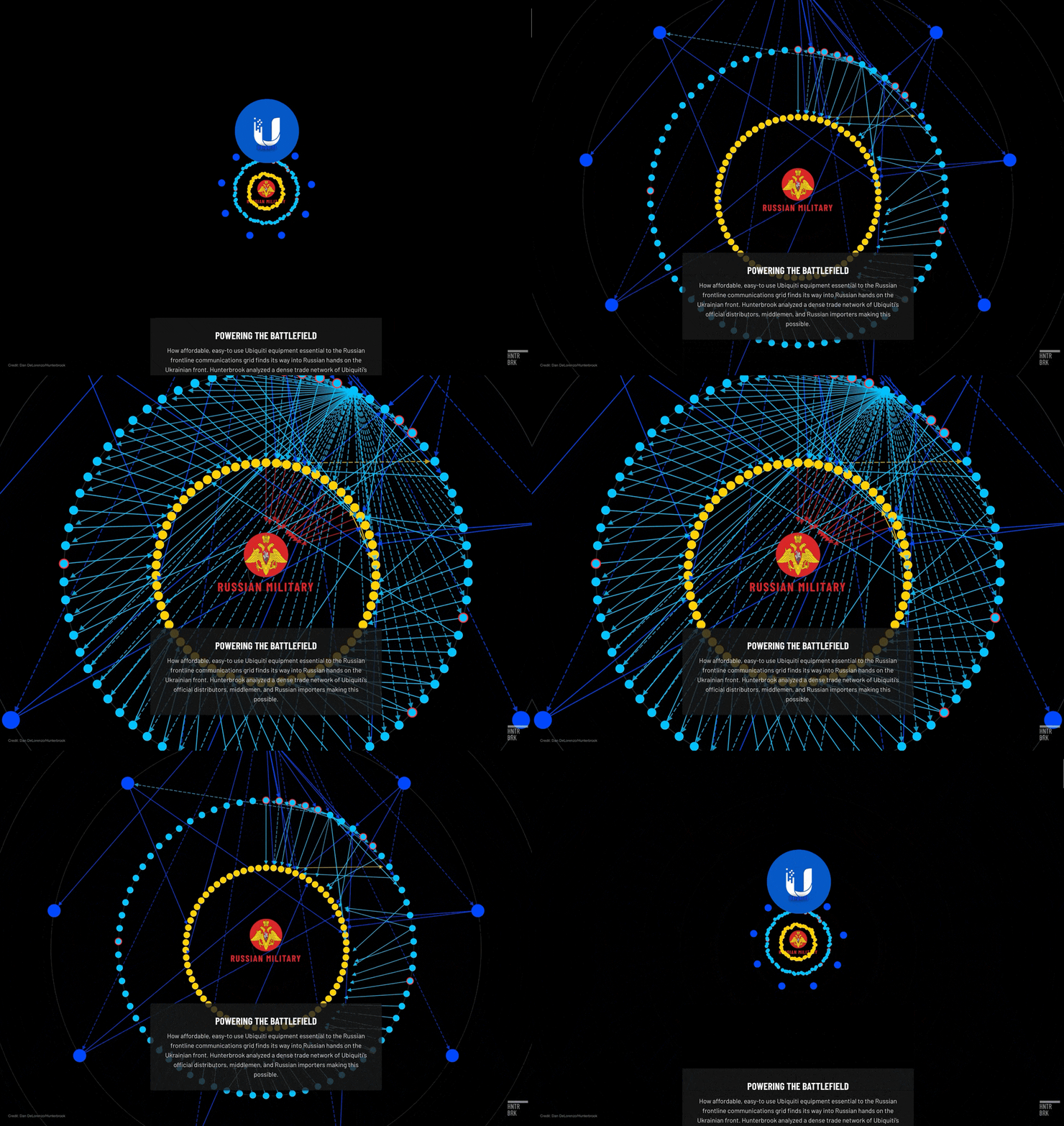
Ubiquiti, a $33 billion tech empire, is led by Robert Pera, owner of the Memphis Grizzlies. He pledged to tighten controls on his products years ago — so why are Russian military units sending Ubiquiti vendors thank-you notes?
Ubiquiti, a $33 billion tech empire, is led by Robert Pera, owner of the Memphis Grizzlies. He pledged to tighten controls on his products years ago — so why are Russian military units sending Ubiquiti vendors thank-you notes?
For one, you need to understand whether Nvidia is acting in good faith or not. If they are not, then one needs to create legal incentives for them to start acting in good faith.
A basic evaluation of sales dynamics is done irrespective of sanctions (remember how the example I described was tied to defining a functional bonus system). Nvidia has an understanding of their sales flow into Singapore. If you have a long standing partner that sees an increase in shipments that aligns with internal demand forecast (which are developed anyways), there is no red flag.
If you suddenly have an unknown entity placing orders larger than the total sales in Singapore for the last quarter. That is a clear red flag. You need to ask them who their end-customers are and whether they have validated that their own end-customers aren’t working on sanction workarounds. If they don’t cooperate, then you blacklist the entity and owners and don’t send them any more shipments.
If Nvidia (or a suspicious new distributor) isn’t doing, then they are acting in bad faith.
That’s why my example referred to a competitor of Ubiquiti (i.e. you don’t actually need activation data to run the calculations as described in my reply to you).
What outlined is just one tool in a toolkit that is regularly used outside of any sanction compliance.
Sales (especially for high-margin high tech items) isn’t done an intuition basis since as far back as the 60s/70s. With modern tech you can very much track your sales flow and identify suspicious sources that are almost certainly working on sanctions work around.
It’s all a matter of motivation (and lack of incentives).
I curious, do you have any information to suggest Ubiquiti has been acting in good faith?
I think you are vastly overestimating things here.
I’ve purchased Ubiquiti hardware. Tens of thousands of dollars worth of shipped directly to the final destination. There was no middle man, no previous relationship, no vendor, no sales associate. I just went to their website, put in my credit card info, and gave a shipping address.
It sounds like you’re saying that such a purchase should be put under scrutiny, but that scrutiny would be… asking me if I am a legit entity? And what, I need to provide some sort of ambiguous proof that I am not the Russian military?
You’re jumping straight into “are they making efforts to prevent it” without even providing a real life way to do so. Sales metrics are all good and fine, but all that really tells you is that there are potentially more sales than needed. The funny thing is, these sales could be spread throughout hundreds of corporations in dozens of countries.
Countries have been doing clandestine purchasing for decades if not centuries, you really think a good faith effort by one company would uncover what dozens of other countries can’t? You really think the US isn’t itching to figure out where those devices are getting in through? Or the EU? Or Ukraine? They have many more resources than Ubiquiti to figure this out. You think they just don’t care?